

Five Questions with Claudia Laurie & Madison McIlwain

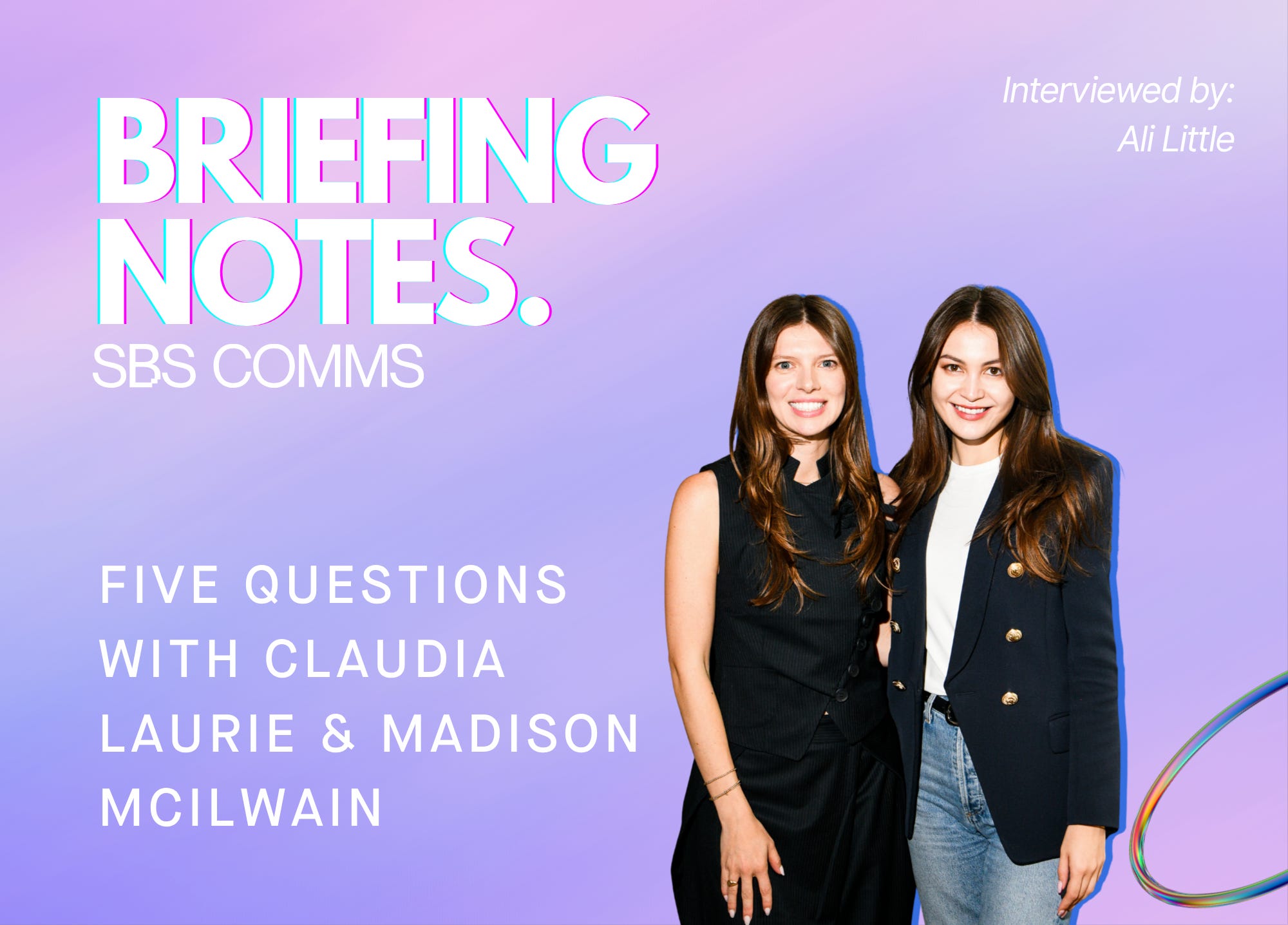
What started in 2020 as a side project between two friends has turned into one of the most trusted and candid conversations in tech. 14 seasons in, with 130+ guests on the roster, and ranking as the number 4 technology podcast on Apple Podcasts globally, The Room Podcast has carved out a very specific lane: getting founders and operators to drop the polished narrative and talk about what really happened when they started out building their companies.
At SBS, we’ve been big fans since early on, not just as listeners, but as partners bringing great voices into the mix. Clients like Flexport, Cloudflare, Loyal, and Chime, among many others have joined The Room, and what’s always stood out is how intentional Claudia and Madison are about the conversation: It always goes beyond the surface.
A lot of that comes from their dynamic, founder + funder/operator + investor relationship, which lets them push on both the emotional side of building, and the decision-making behind it. You see it in the kinds of questions they ask (questions without clean answers), and how open guests are in return.
So with Season 14 kicking off and a lot to unpack around AI, second acts, and how companies are actually being built right now, we’re thrilled to dig in on what’s next for them. Let’s get into it.
Five questions with… Claudia Laurie & Madison McIlwain
Q: Congratulations on heading into Season 14 of The Room Podcast! What are some of the themes or guests your listeners can look forward to this season?!
Claudia: Season 14 really centers around how AI is reshaping how companies are actually built and operated… not just the surface-level “AI is changing everything,” but what that looks like in practice. We’re spending a lot of time with founders who are rethinking core functions like marketing, customer support, and product from first principles. We also continue to lean into more candid founder journeys – moments of doubt, pivots, and the less polished parts of building. Some of my favorite conversations this season are the ones where guests say they have never told a particular story before.
Madison: Season 14 spotlights founders navigating big second acts and market inflection points.The season is about zero-to-IPO (or exit) journeys in a world where AI, community, and GTM are all being rewritten in real time. This season, listeners can look forward to:
Founder “comebacks” at iconic companies
The Nextdoor CEO, returning to lead the company reimagining neighborhood and community in the age of AI
Ring founder Jamie Siminoff, now back leading Ring at Amazon, where physical and digital community, and physical intelligence, meet
Where tech, regulation, and AI collide
Deep dives with legal tech and adjacent founders on how AI is reshaping workflows, risk, and what it takes to build in highly regulated spaces
A rare, inside look at an acquisition Metronome’s founder, on selling to Stripe, the emotional and strategic reality of exiting in this market, and how founders should really think about liquidity.
Q: You bring a rare “founder and funder” dynamic to the show – Claudia, you co-founded and ran Prive (which was acquired by Recurly), and Madison, you were a seed-stage partner at Defy VC before heading to Harvard Business School. How has having real skin in the game on both sides shaped the kinds of conversations you’re able to pull out of guests?
Claudia: Having been a founder, I’m pretty aware of how easy it is to make a story sound clean in hindsight. But that version usually isn’t that useful. What I try to get to in conversations is what actually happened: the messy middle, the things that didn’t work, the decisions that were unclear at the time. That’s where the real insight is. There’s also a level of empathy that changes the dynamic. Founders open up more when they feel like you understand the emotional side of building, not just the outcomes.
Madison: From the investing side, I’m always listening for decision-making frameworks: how someone thinks, not just what they did. Our founder-founder combination works because we’re coming at the same story from two angles: Claudia is often pulling out the lived experience, and I’m trying to distill the underlying pattern or insight. That duality usually leads to more interesting conversations. I love how today we have some hero questions that really get to the heart of these dynamics. When I ask the founder about “the first person who said yes to investing in you?” It makes sense. When Claudia asks them, “what was a time when things didn’t go up and to the right?” The founder already trusts her authentic perspective as a founder and is willing to open up that much more because of the trust we’ve built together in the room.
Q: From a comms and PR perspective: what does a great guest pitch to The Room actually look like? What gets you to say yes, and what are the most common mistakes PR people make when reaching out?
Madison: The best pitches feel like they actually know the show. They reference a specific episode or theme and explain why their founder would add something new to that conversation.
The fastest way to get a no is a generic pitch that could’ve been sent to 50 podcasts. We’re really protective of the audience’s time, so we’re always asking: what will someone learn from this that they can’t get elsewhere?
Claudia: I’d add that clarity matters a lot. A great pitch makes it immediately obvious what the unique insight is. Whether that’s a contrarian take, a specific playbook, or a story that hasn’t been told before. A common mistake is over-indexing on credentials instead of substance. An impressive resume is table stakes; we care much more about whether someone has a sharp, differentiated perspective.
Q: The Room has grown well beyond the feed – you’ve built a real IRL community with events in cities across the country and your annual Inside Summit. At your second annual Summit last fall, “high taste” in the age of AI was a standout theme. What does that concept mean to you both, and what does truly exceptional attention to detail look like right now, whether that’s in infrastructure and architecture decisions or consumer product design?
Madison: As AI makes it easier to produce more, “high taste” becomes the filter. It’s about knowing what not to build, what not to ship, what not to say. The core idea is that when creation becomes effortless, discernment becomes the scarce resource. AI slop is what happens when you optimize for volume over judgment, it looks right but doesn’t make anyone feel anything.
Fashion actually lived this already. When industrialization democratized clothing, the market split: Zara won on efficiency, Hermès won on accumulated craft and taste. Luxury didn’t survive commodification; it flourished because of it.
The same split is happening in software right now. For infrastructure, exceptional attention to detail means having an opinion; such as opinionated defaults, considered developer experience, deployment patterns that reflect years of accumulated judgment. That’s not just capability, it’s taste encoded into the foundation. And taste compounds. Every intentional decision builds on the last in a way that becomes genuinely hard to replicate. I wrote more on this here.
Claudia: I think of high taste as judgment under abundance. When everyone has access to the same tools, the differentiator becomes taste… what you choose to prioritize, how you sequence decisions, and how disciplined you are.
In both infrastructure and consumer products, the best teams right now are the ones that pair speed with restraint. They can move quickly, but they’re incredibly selective about where they spend that velocity.
Q Beyond your own show, what are you consuming? What podcasts, newsletters, or media are you both paying attention to right now?
Madison: We’ve been really enjoying what Alex Konrad is building with Upstarts Media. It’s one of the few places that consistently surfaces what’s actually happening with emerging companies in a thoughtful way.
Acquired is an evergreen for me. The depth and storytelling are just in a different league, and it’s been a source of inspiration for us since day one.
Claudia: I’ve also been spending time learning more about live, broadcast-style content, especially what’s happening with TBPN. It feels like we’re early to a shift in how content is consumed and experienced, and that’s been really interesting to dig into.
And then outside of “industry” content, I love a good fiction book. During my time as a founder, reading fiction purely for the love of it was honestly what helped me reset through the long days of highs and lows. It’s one of the few things that fully takes you out of your own head.